Table of Contents
- Building a Cohesive Lifestyle Product Collection: The Framework
- How to Create a Lifestyle Brand With a Clear Point of View
- Curating a Retail Product Collection Around Customer Needs
- How to Design a Fashion Collection That Fits Your Brand
- Building a Cohesive Brand Identity Across Color, Voice, and Content
- Sourcing, Inventory, and Merchandising Economics That Keep the Collection Profitable
- Launch Testing, Feedback, and Post-Launch Iteration
- Conclusion: Your Collection Is a Living System
- Frequently Asked Questions
Last Updated: October 13, 2026
Building a Cohesive Lifestyle Product Collection: The Framework
Building a cohesive lifestyle product collection is the discipline of choosing every item you sell so it reinforces one recognizable point of view, rather than assembling a random mix of trending products.
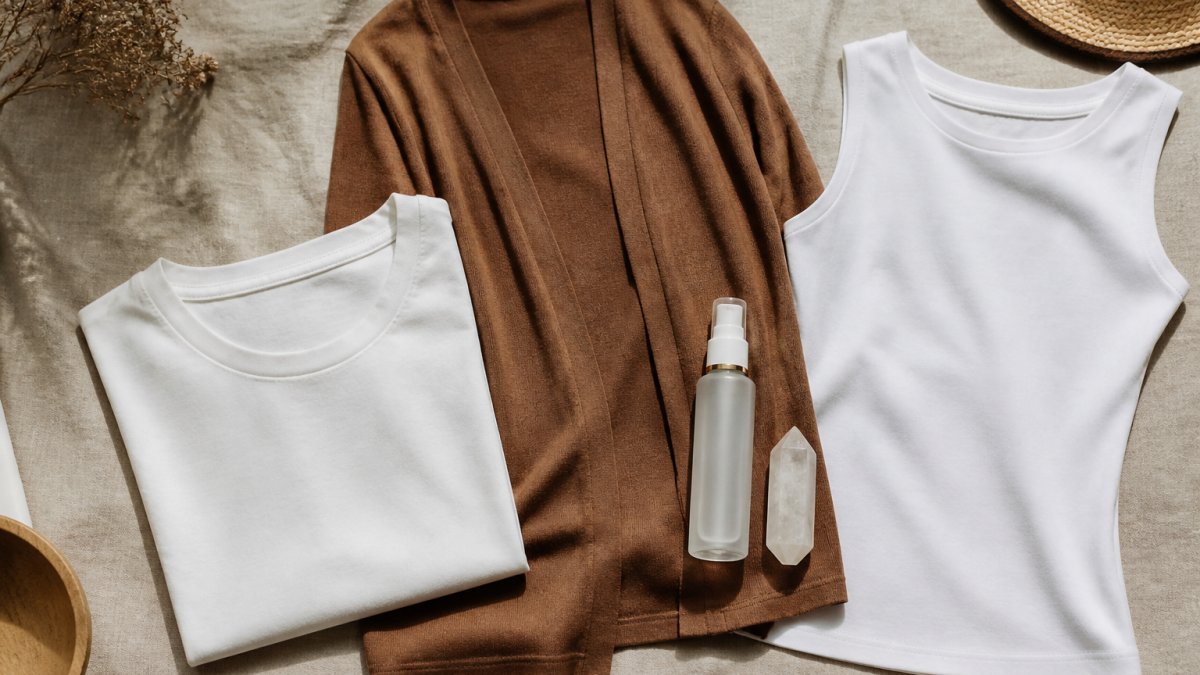
That distinction matters more than most founders expect. A shopper who lands on a page and sees a white relaxed tee, a toffee cardigan, and a crystal meditation tool arranged together understands the brand in seconds.
Below, we break down the full framework: brand point of view, assortment architecture, visual identity, sourcing economics, and the launch-and-iterate loop that keeps a collection alive after it ships.
What Makes a Collection Cohesive
A collection is cohesive when a customer could identify any single product as yours without seeing the label. That test is stricter than it sounds, and it is the one we use internally before anything goes live.
Cohesion rests on four pillars working together:
- Shared point of view. Every product answers the same question about how the customer wants to feel.
- Consistent visual language. Color palette, photography style, and typography repeat across categories.
- Complementary function. Items solve adjacent problems in the same daily routine.
- Repeatable price tier. The collection sits in one recognizable quality and price band.
Miss any one of these and the collection reads as a store, not a brand. The practical difference shows up in repeat purchase rates: customers who buy into a coherent world come back for the next piece, while customers who bought a one-off item rarely return.
How to Create a Lifestyle Brand With a Clear Point of View
A lifestyle brand is a business that sells a way of living, not just a product category. The point of view comes first, and every product decision follows from it.
From there, the work is mostly subtraction. If your sentence is about effortless glamour for busy professionals, a novelty gag gift does not belong in the collection no matter how well it might sell.
Three inputs sharpen a point of view faster than anything else:
- Customer interviews. Ask existing buyers what they were trying to accomplish when they bought.
- Return and complaint data. What customers send back reveals where your promise and your product diverge.
- Your own refusals. Track the products you considered and rejected, and why.
That last one is underrated. A documented list of "we do not sell this because" is the most reliable guardrail a growing catalog has.
Curating a Retail Product Collection Around Customer Needs
Curating a retail product collection means selecting items against documented customer needs rather than supplier availability or margin alone. The order of operations is what separates a curated catalog from a dropship store.
We start with the need, then find the product. Not the reverse. A customer who already trusts you for a soft everyday cardigan has a related need for a base layer that works under it, and a related need for a skincare routine that fits the same five-minute morning. Each of those is a legitimate expansion. A random category jump is not.
A practical curation checklist:
- Does this product serve a need our existing customers have already told us about?
- Can we photograph it in the same visual style as the rest of the catalog?
- Does it sit within our established price band, or does it require a new tier?
- Would it look at home next to our three best-selling items?
- Can we explain in one sentence why we chose it over alternatives?
Any "no" is a signal to slow down. Two or more is usually a pass.
Assortment Architecture: Hero, Core, and Complementary Roles
Every healthy assortment has three product roles, and each one does a different job. Confusing them is why so many catalogs feel flat.
| Role | Job in the Assortment | Typical Share of SKUs | How It Is Priced |
|---|---|---|---|
| Hero | Drives discovery and traffic | 10-15% | Full price, rarely discounted |
| Core | Generates repeat revenue | 50-60% | Stable, occasionally bundled |
| Complementary | Increases basket size | 25-35% | Lower ticket, add-on positioning |
Hero products are the ones people find you through. They carry the strongest visual identity and should never be discounted heavily, because their job is to signal what the brand is.
Core products are the reliable middle. These are the items customers reorder and gift. Our Essential Toffee Long + Soft Cardigan sits here: a semi-fitted, ultra-soft layer that pairs with almost anything else in the catalog.

Complementary products exist to raise average order value. A Classic White Cap Sleeve Tank at a lower ticket price is a natural add-on to a cardigan purchase, and it solves a real layering problem the customer already has.

The rule of thumb: heroes bring people in, core keeps them, complementary makes the visit worth more.
How to Design a Fashion Collection That Fits Your Brand
Designing a fashion collection that fits your brand starts with constraints, not inspiration. Decide the color palette, silhouette family, and fabric story before you sketch or buy anything.
A workable process looks like this:
- Lock the palette. Three to five colors that repeat across every drop, plus one seasonal accent.
- Define two or three silhouettes. Relaxed, fitted, and longline cover most everyday needs without fragmenting the line.
- Choose fabrics that behave the same way. If one piece is a soft knit and the next is stiff canvas, the collection will feel stitched together from different brands.
- Build the layering logic. Every piece should have at least two other pieces it can be worn with.
- Test the palette against your existing catalog. If a new item needs a new color story, it is a new collection, not an addition.
The Short Sleeve Essential Relaxed T-shirt is a good example of constraint-driven design. A relaxed fit, crew neckline, and neutral white mean it layers under the cardigan, over the tank, and alongside almost anything else, which is exactly what a core piece should do.

Where most brands slip is seasonal reinvention. A new season does not require a new identity. It requires new expressions of the same one.
Building a Cohesive Brand Identity Across Color, Voice, and Content
A cohesive brand identity is the sum of every color, word, and image a customer encounters, and inconsistency in any one of them weakens the others. Identity is not a logo file.
Short Sleeve Essential Relaxed T-shirt →
Three surfaces carry most of the weight:
Color. Pick a palette and hold it. If your product photography runs warm and your email headers run cool, the brand reads as two different companies. Set hex values and use them everywhere, including packaging inserts and social templates.
Voice. Write down three adjectives that describe how you speak, then write three that describe how you do not.
Content. Every post, email, and product page should answer the same underlying question your point of view answers. Content that drifts into unrelated topics trains the audience to expect nothing in particular.
Consistency compounds.
Sourcing, Inventory, and Merchandising Economics That Keep the Collection Profitable
Sourcing and inventory decisions determine whether a beautiful collection survives its first year. Cohesion without margin is a hobby.
The economics come down to four numbers you should track per product, not per collection:
- Contribution margin. Revenue minus product cost, shipping, and payment fees. This is the number that pays for everything else.
- Sell-through rate. Units sold divided by units stocked, measured over a fixed window.
- Inventory turn. How many times you sell through and replace your stock in a year.
- Return rate by SKU. High returns on one item usually mean a fit or description problem, not a demand problem.
Sourcing follows from those numbers. For core items, order in larger quantities to lower unit cost and accept longer lead times.
Inventory planning should be driven by sell-through, not by gut feel. If a core item sells through in six weeks, you were understocked.
On responsible sourcing, the practical move is to ask suppliers specific questions and document the answers: where the fabric is milled, what certifications the factory holds, and how they handle overruns. Vague answers are a signal.
Launch Testing, Feedback, and Post-Launch Iteration
A collection is never finished at launch. The first ninety days tell you which products are heroes, which are core, and which need to be cut.
Set up the measurement before you launch, not after. At minimum, track sell-through by SKU, return rate, and which products appear together in the same order.
Then run a simple loop:
- Week 1-2: Watch traffic and add-to-cart rates. Low add-to-cart on a hero suggests a photography or pricing problem.
- Week 3-6: Watch sell-through and returns. Rising returns on one SKU usually means a fit issue.
- Week 7-12: Watch repeat purchase and cross-category buying. This is where you learn whether the collection is actually cohesive.
Customer feedback should be collected deliberately. A short post-purchase question asking what the customer was looking for when they bought tells you more than a five-star rating ever will.
The output of this loop is a decision per product: promote it to hero, keep it as core, reposition it as complementary, or cut it.
Conclusion: Your Collection Is a Living System
The hardest part of building a cohesive lifestyle product collection is not the first launch. It is resisting the urge to add something that does not belong, season after season, while the catalog is still small enough to keep coherent.
Sak's Gl'amour exists for exactly this reason. Our curated selection spans apparel, layering essentials, and skincare, chosen so the pieces work together rather than competing for attention, and priced so the quality is visible in the product rather than the marketing.
Get started with Sak's Gl'amour and see how a curated collection comes together in practice.
Frequently Asked Questions
What are the four essential components of building a successful brand?
A successful brand rests on four components: a defined point of view, a clear target audience, a consistent visual and verbal identity, and a product assortment that delivers on that promise. Each component reinforces the others. Your point of view shapes who you serve, your audience shapes what you make, and your identity shapes how it looks and sounds. When one drifts, the whole collection feels scattered.
How do you choose products for a cohesive lifestyle product collection?
Start with the customer need each product answers, then check three things: does it share your color palette and materials, does it fill a role your assortment is missing, and can it be styled or used alongside something you already sell? A white relaxed tee and a toffee cardigan work as a set because they share a soft, neutral palette and layer together. If a product passes those checks, it earns a place.
How can a brand connect apparel, skincare, and wellness products?
Connect categories through shared rituals rather than shared materials. A morning routine might include a skincare step, a layering piece like a cap sleeve tank, and a few minutes of meditation. When you frame products as parts of the same daily routine, customers see one lifestyle instead of three unrelated departments. Consistent colors, photography, and messaging across categories reinforce that connection.
What does it mean for a brand to be cohesive?
Cohesion means every touchpoint, from product photos to packaging to the tone of your captions, feels like it came from the same source. Customers should recognize your brand before they read the name. That comes from repeating a defined color palette, a consistent brand voice, and a stable set of product roles. Cohesion is not sameness; it is recognizability across variety.
How do you keep a product collection consistent as it grows?
Set written standards before you scale: a locked color palette, approved materials, a brand voice guide, and defined product roles. Review every new addition against those standards, and retire products that no longer fit. Growth should deepen the collection, not dilute it. Audit your assortment each season, compare sales performance by role, and cut what no longer serves the brand's point of view.