Table of Contents
- Your Simple Roadmap to Essential Skincare Steps
- How to Determine Your Skin Type First
- The Best Order to Apply Skincare Products
- Morning vs Night Skincare Routine: Why They Differ
- Step-by-Step: Your Essential Skincare Steps for Beginners
-
Common Mistakes to Avoid in Your Daily Regimen
- Mistake 1: Confusing "Burning" with "Working"
- Mistake 2: Applying Products to Bone-Dry Skin
- Mistake 3: Ignoring the Neck and Chest
- Mistake 4: Treating Your Skin the Same All Year
- Mistake 5: Overlooking the Order of Your Eye Cream
- Mistake 6: The Budget Trap: Splurging on Cleanser, Saving on Sunscreen
- The 5-Minute Rescue Routine
- Skincare for Busy Lifestyles: Simplify Without Sacrificing Results
- Conclusion: Your Path to Consistent, Glowing Skin
- Frequently Asked Questions
Last Updated: September 6, 2026
Your Simple Roadmap to Essential Skincare Steps
Most beauty advice overcomplicates things. A consistent routine built on the essential skincare steps for everyday beauty matters far more than the number of products you own.
At Sak's Gl'amour, we have curated routines that strip away the guesswork. The goal is consistency, not perfection. Below, we show you how to build a routine that fits your life.
How to Determine Your Skin Type First
Before you buy a single product, you need to know your baseline. How to determine your skin type starts with a simple observation test, not a paid consultation.
Wash your face with a gentle cleanser, pat it dry, and wait about 30 minutes without applying anything. If your skin feels tight and looks flaky, you are likely dry. If your T-zone (forehead, nose, and chin) is shiny but your cheeks feel normal, you have combination skin. If shine appears everywhere quickly, you are oily. If your skin stings, itches, or turns red easily, you likely have sensitive skin.
This matters because the best order to apply skincare products and the formulas you choose depend entirely on this assessment. A heavy cream designed for dry skin will clog oily pores, just as a mattifying gel will dehydrate parched skin.

The Best Order to Apply Skincare Products
The sequence of your routine determines how well active ingredients absorb. The general rule is simple: apply products from thinnest to thickest consistency.
This layering method ensures that lightweight, water-based products penetrate before heavier oils and creams create a barrier. For example, a hyaluronic acid serum should sit on damp skin early, while a facial oil or rich night cream seals everything in last.
A common mistake is applying a thick moisturizer before a spot treatment, which prevents active ingredients from reaching the skin barrier. Consistency in this order separates a good routine from a great one.
Morning vs Night Skincare Routine: Why They Differ
A morning vs night skincare routine comparison reveals that daytime focuses on protection, while nighttime focuses on repair.

In the morning, your primary goal is to defend against environmental stressors: a light cleanse, antioxidants like vitamin C, and a non-negotiable sunscreen with SPF. During the night, your skin enters repair mode, making it the ideal time for retinoids, peptides, and richer moisturizers that support cell turnover while you sleep.
Skipping SPF in the morning is the single biggest mistake in any daily regimen. At night, do not skip cleansing, even if you did not wear makeup, because your skin accumulates oil and pollution throughout the day.
Step-by-Step: Your Essential Skincare Steps for Beginners
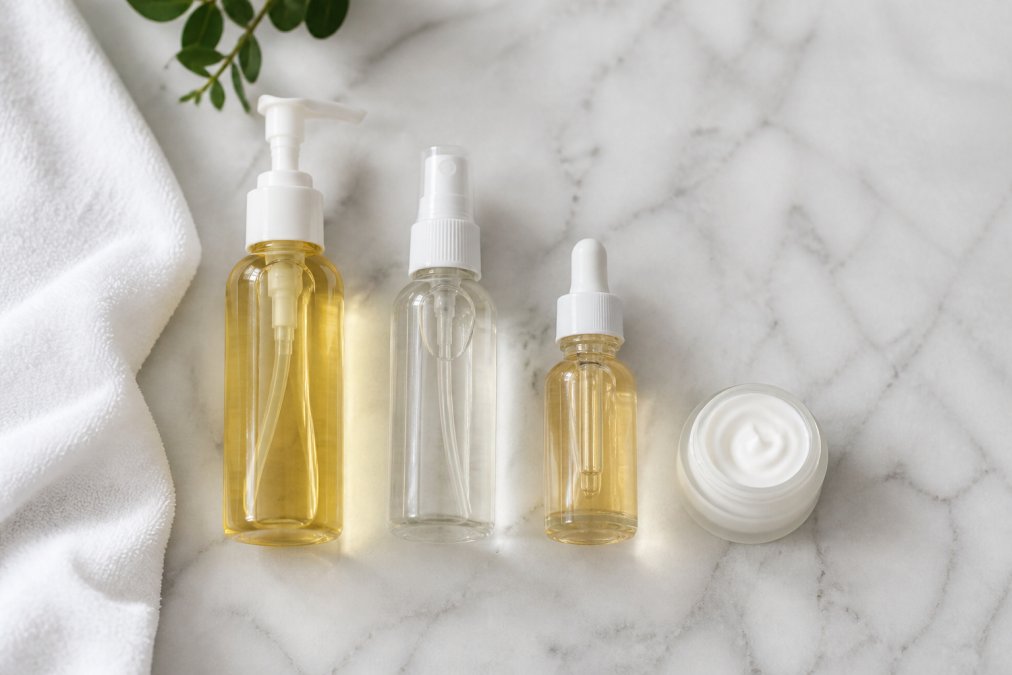
If you are starting fresh, resist the urge to buy everything at once. A simplified routine of five products, cleansing, toning, treating, moisturizing, and protecting, is enough to see significant improvement in skin texture and hydration.
Step 1: Cleanse to Remove Impurities
Cleansing is the foundation of every routine. It removes makeup, excess oil, and dirt that clog pores and dull the complexion. A double cleanse, starting with an oil-based cleanser to break down makeup and sunscreen, followed by a water-based cleanser, is the most effective method.
For a simple start, a single cleansing oil works well for most skin types. The Farm Girl Cleansing Oil, available at Sak's Gl'amour, uses jojoba and sea buckthorn oils to dissolve impurities. Massage it onto dry skin, emulsify with water, and rinse, about 60 seconds.
How to choose your cleanser: If you have dry or sensitive skin, look for cream or milk cleansers with glycerin or ceramides. If you are oily or prone to breakouts, a gel or foam cleanser with salicylic acid can help manage excess sebum, but avoid using it more than once a day. Beginners with oily skin often over-cleanse, which triggers rebound oil production.
Step 2: Tone and Apply Treatments
After cleansing, your skin is primed to absorb what comes next. A toner helps balance pH and adds hydration, look for alcohol-free formulas with rose or hyaluronic acid. This is also the stage for serums and spot treatments, where active ingredients like vitamin C or retinoids do their heavy lifting.
The Rose Toner from Sak's Gl'amour comes in a spray bottle for easy application, while the Plumping Hyaluronic Acid Serum delivers moisture. Apply your serum to slightly damp skin to lock in hydration. For beginners, introduce one active ingredient at a time and patch test a new serum behind your ear for 24 hours.
How to choose your toner and serum: Toners fall into two categories: hydrating (with hyaluronic acid, glycerin, or rose water) and exfoliating (with AHAs or BHAs). For your first toner, choose a hydrating formula. For serums, start with a single active, hyaluronic acid is the safest first serum because it works for every skin type and rarely causes irritation. If your primary concern is dark spots or uneven tone, a vitamin C serum used in the morning is a strong second choice, but expect a tingling sensation for the first week.
Step 3: Moisturize and Protect
The final step in any routine is sealing in hydration with a moisturizer. This creates a protective layer that prevents water loss and keeps the skin barrier healthy. In the morning, follow with a broad-spectrum sunscreen of at least SPF 30, even on cloudy days (the American Academy of Dermatology).
For dry skin, a richer cream is necessary, while oily and combination skin types should opt for a lightweight, non-comedogenic gel. The Fresh Face Cream from Sak's Gl'amour is suitable for daily use, and the Dry Skin Hydrating Routine Kit bundles it with a cleansing oil, toner, and serum. For those targeting fine lines, the Anti-Aging Skincare Routine Essentials Kit provides a full 7-item system.
How to choose your moisturizer: The texture matters more than the price. Look for "non-comedogenic" on the label if you are prone to breakouts. Dry skin needs occlusives like shea butter or squalane to trap moisture. Oily skin benefits from humectants like hyaluronic acid in a gel base. Skipping moisturizer on oily skin paradoxically makes oil production worse.
A note on sunscreen: This is the one product where you should not compromise. Look for "broad-spectrum" on the label, which means it protects against both UVA (aging) and UVB (burning) rays. Mineral sunscreens with zinc oxide or titanium dioxide sit on top of the skin and are less likely to irritate sensitive skin (the FDA). Chemical sunscreens absorb into the skin and feel lighter but can sting if you have a compromised barrier. Apply two finger-lengths to your face and neck, most people under-apply by half.
Building Your Routine Over Time
Successful skincare users do not add products all at once. Start with just cleanser, moisturizer, and sunscreen for two weeks to establish a baseline. Then add a toner for another two weeks. Finally, introduce a serum. If you experience breakouts or redness at any stage, remove the newest product and consult a dermatologist if the reaction persists.
Common Mistakes to Avoid in Your Daily Regimen
Many people sabotage their progress with well-intentioned errors. The most common is over-exfoliating. Using harsh scrubs or chemical exfoliants daily strips the skin barrier, leading to redness, sensitivity, and breakouts. Exfoliation should happen only once or twice a week (the American Academy of Dermatology).
Another frequent issue is skipping sunscreen when indoors, UV rays penetrate windows, and cumulative exposure leads to premature aging and hyperpigmentation. Additionally, apply moisturizer to damp skin, not bone-dry skin, to trap water in the epidermis.
Beyond these basics, several deeper mistakes derail even committed routines.
Mistake 1: Confusing "Burning" with "Working"
A tingling sensation from a new active ingredient like vitamin C or retinol is normal for the first few applications. However, a burning sensation that persists beyond five minutes or causes visible redness is a sign of barrier damage, not efficacy. If your skin feels hot or looks inflamed, stop the product, simplify your routine to cleanser and moisturizer for a week, and reintroduce the active at a lower frequency, every third night instead of every night.
Mistake 2: Applying Products to Bone-Dry Skin
Hyaluronic acid and other humectants work by pulling water from the environment into your skin. If you apply them to completely dry skin, they have nothing to pull from and can actually dehydrate the upper layers. The fix is simple: after cleansing, pat your face until it is damp, not dripping, then apply your serum within 60 seconds. This "damp skin rule" also applies to moisturizer.
Mistake 3: Ignoring the Neck and Chest
Your face stops at your jawline, but your skin does not. The neck and chest are often the first areas to show signs of aging because they are thinner and produce less oil, yet most people stop their routine at the chin. Extend your cleanser, serum, moisturizer, and sunscreen down to your collarbone, an extra 15 seconds that prevents the "mask line" effect.
Mistake 4: Treating Your Skin the Same All Year
Most skincare guides are static, but your skin changes with the seasons. In winter, cold air and indoor heating strip moisture, so you may need a richer moisturizer or an extra layer of hydration. In summer, humidity means lighter gels may suffice, but you also need to reapply sunscreen more frequently if you are outdoors. Keep two moisturizers: a lighter gel for summer and a richer cream for winter.
Mistake 5: Overlooking the Order of Your Eye Cream
If you use an eye cream, it should go on before your facial moisturizer but after your serum. The skin around the eyes is thinner and cannot absorb heavy creams as easily. Applying moisturizer first creates a barrier that prevents the eye cream from penetrating.
Mistake 6: The Budget Trap: Splurging on Cleanser, Saving on Sunscreen
A frequent error is spending heavily on a cleanser, a product that stays on your skin for 60 seconds and gets rinsed off, while buying the cheapest sunscreen available. This is backwards. The cleanser's job is simply to remove dirt without stripping your skin; a drugstore option with glycerin performs as well as a luxury one. Sunscreen prevents photoaging, hyperpigmentation, and skin cancer. It is the one place where investing in a formula you will actually wear daily, one that does not leave a white cast or feel greasy, is worth the premium. Allocate 40% of your routine budget to sunscreen, 30% to serums, and the remaining 30% to cleanser, toner, and moisturizer combined.
The 5-Minute Rescue Routine
If you have made one of these mistakes and your skin is now red, tight, or breaking out, do not panic. Strip your routine back to three products for 7-10 days: a gentle cleanser, a ceramide-rich moisturizer, and sunscreen. Skip all active ingredients, including vitamin C, retinoids, and exfoliating acids. This gives your skin barrier time to repair itself. Barrier recovery takes about two weeks, and trying to "fix" irritation with more products only prolongs the problem.
Skincare for Busy Lifestyles: Simplify Without Sacrificing Results
A lack of time is the top reason routines fail. If you are a busy professional, you do not need a 10-step regimen. A minimalist routine of cleanser, moisturizer, and sunscreen in the morning, with an added treatment at night, delivers most of the benefits. Sustainability also means using fewer products consistently rather than owning a shelf of half-empty bottles.
The Double Cleansing Face Kit from Sak's Gl'amour pairs a cleansing oil with Wild Rose Cleansing Grains, offering an efficient two-step cleanse. For those who want a complete system without the mental load of selecting individual products, curated bundles like the Dry Skin Hydrating Routine Kit simplify your shopping and your shelf.

Conclusion: Your Path to Consistent, Glowing Skin
Building a routine is about consistency, not complexity. Start with the basics, cleanse, tone, treat, and protect, and stick with it for at least six weeks.
Sak's Gl'amour makes this easier with curated skincare kits that bundle the essential products into one simplified routine. Whether you need the Anti-Aging Skincare Routine Essentials Kit or the Double Cleansing Face Kit, our selection is designed to elevate your beauty and simplify your daily regimen.
Frequently Asked Questions
What are the 7 steps of skincare?
A comprehensive 7-step routine typically includes: 1) Cleansing oil or balm to remove makeup and sunscreen, 2) A water-based cleanser, 3) Exfoliation (1-3 times per week), 4) Toner to balance the skin, 5) Serum or treatment with active ingredients, 6) Moisturizer to hydrate, and 7) Sunscreen in the morning. For a simpler start, focus on cleansing, moisturizing, and sun protection before adding more steps.
What is the 4-2-4 rule in skincare?
The 4-2-4 rule refers to cleansing times. It suggests massaging an oil-based cleanser into your skin for 4 minutes, followed by 2 minutes with a water-based cleanser, and then spending 4 minutes applying your moisturizer or treatments. This method encourages a thorough, unhurried routine that helps active ingredients absorb better, though you can adjust the times to fit your schedule.
What is the correct order to apply skincare products?
The best order to apply skincare products is from thinnest to thickest texture. Start with cleanser, then toner, followed by serums and treatments like hyaluronic acid. Next, apply eye cream and a moisturizer to seal in hydration. In the morning, always finish with sunscreen as the final step. At night, you may use a facial oil or richer night cream last.
How do I build a skincare routine for beginners?
Beginners should start with three essential skincare steps: a gentle cleanser, a moisturizer suited to their skin type, and a broad-spectrum sunscreen with SPF 30 or higher for the morning. Once this base feels comfortable for a few weeks, you can introduce a toner and a serum, such as vitamin C for the morning or a hydrating serum at night. Always patch test new products.