Table of Contents
- Why Modern Lifestyle Essentials Look Different in 2026
- 2026 Lifestyle Trends Worth Building Around
- Must-Have Household Items 2026 Buyers Actually Use
- Everyday Wellness Essentials for Busy Professionals
- A Minimalist Lifestyle Guide for Real Homes
- Budget Tiers: What to Spend on Lifestyle Essentials
- Privacy, Security and Accessibility in Connected Living
- How to Build Your 2026 Essentials Checklist
- Frequently Asked Questions
Last Updated: October 18, 2026
Why Modern Lifestyle Essentials Look Different in 2026
The modern lifestyle essentials for 2026 living are no longer about owning more.
The change is practical, not philosophical. Remote work blurred the line between lounge and office. Digital overload pushed people toward quieter evenings.
What most buying guides miss is that "essential" now means multifunctional. A single piece of clothing should work from couch to cafe. A candle should clean the air, not pollute it.
Below, we show you exactly how to build a 2026 essentials list that spans home, health, technology, and daily routine, with budget tiers and the trade-offs that matter.
2026 Lifestyle Trends Worth Building Around
Three forces define 2026 lifestyle trends: wellness-focused interiors, deliberate disconnection from screens, and materials that age well. These are not aesthetic preferences. They are responses to how people actually live now.
Wellness-Focused Interiors and Slow Living
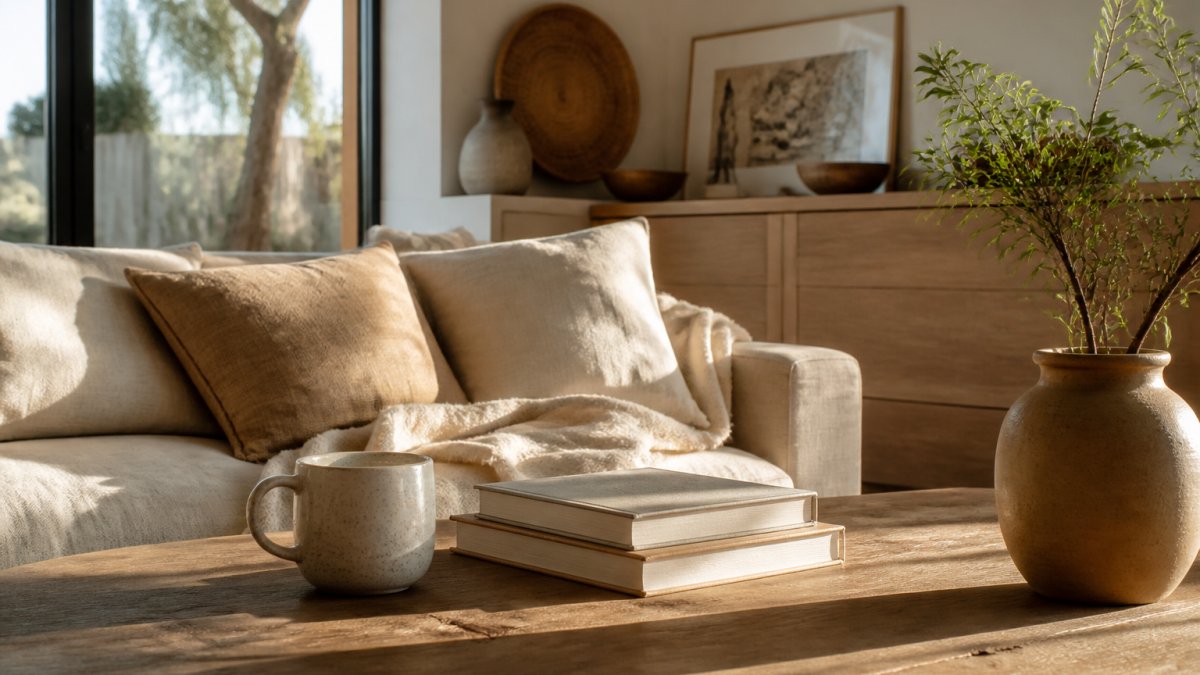
Wellness-focused interiors prioritize air quality, natural light, and textures that feel good to touch. Slow living is the daily routine that supports them: fewer decisions, calmer evenings, and objects chosen for durability rather than novelty.
In practice, this means swapping synthetic-fragrance candles for clean-burning options. Our Clove Coconut Wax Candle is hand-poured from sustainably sourced coconut wax with a cotton wick and phthalate-free fragrance, so it burns slowly and evenly without soot.
For scent without flame, an aromatherapy essential oil in lavender or sandalwood, $38.29 for 10 ml, can be dripped into a diffuser or water.
Smart-Home Gadgets Without the Digital Overload
The useful smart-home purchases in 2026 are the boring ones: a plug that turns a lamp on, a speaker that plays one playlist, a scale that logs weight without an app subscription. The rule we recommend is one device, one job, no account required unless it adds real value.
Skip anything that demands a monthly fee for basic function. Skip anything that needs a hub you do not already own. And skip the app-controlled everything trend entirely if you already feel screen fatigue by 6 p.m.
Must-Have Household Items 2026 Buyers Actually Use
The must-have household items 2026 buyers report reaching for daily share one trait: they solve a recurring annoyance. Storage that ends the search for keys. Textiles that survive constant wear. A bag that carries what you actually take out the door.
Here is how we would prioritize the list, ranked by how often the item earns its place:
- A bottle-carrying bag with built-in organization. Our Mini Backpack & Squeeze Holder bundle, $49, holds a water bottle securely and includes a key hanger, lotion holder, and pill holder. Ten colorways.
- Loungewear that doubles as daywear. The Women's Bamboo Lounge Jogger Pants, $52.49, are 95% bamboo viscose with two roomy side pockets and tag-free construction.
- A clean-burning candle for evenings, as above.
- A dry brush for circulation and smoother skin. Ours is $16 with plant-based sisal bristles and a compostable build.
- A tote that handles errands and travel. The Leopard Tote, $69.95, is 600 denier polyester canvas with a vinyl bottom and meets carry-on size requirements. It is not insulated.
| Item | Price | Daily Job | Best For |
|---|---|---|---|
| Mini Backpack bundle | $49.00 | Carries bottle, keys, vitamins | Commuters, gym-goers |
| Bamboo Lounge Joggers | $52.49 | Comfort wear that looks intentional | Remote workers |
| Clove Coconut Wax Candle | $12.00 | Calm, clean-burning scent | Evening routines |
| Bamboo Dry Brush | $16.00 | Exfoliation and circulation | Self-care routines |
| Leopard Tote | $69.95 | Errands, beach, travel | Weekenders |
Everyday Wellness Essentials for Busy Professionals
Everyday wellness essentials should fit into a routine you already have, not require a new one. The test we apply: can you use it in under two minutes, without equipment, on a normal Tuesday?


Two items pass that test cleanly. The first is a magnesium supplement you can drop into an existing drink. Mellö Magnesium travel sticks, $24 for 10 sticks, combine three forms of magnesium with GABA and L-theanine.
The second is a dry brush. Two minutes of circular strokes before a shower is enough to lift dead skin cells and support circulation, according to the product's own guidance. Replace it roughly every three months.
A word of caution on supplements: magnesium is not a sedative, and it is not a substitute for medical advice.
A Minimalist Lifestyle Guide for Real Homes
A minimalist lifestyle guide for real homes starts with a number, not a mood board. Count how many items in a room you used in the last 30 days. Everything else is a candidate for storage, donation, or removal.
That single exercise beats most decluttering advice because it produces evidence instead of guilt. Families with children will keep more than a single person in a studio. That is fine. Minimalism is not an empty shelf; it is a shelf where everything on it has a job.
Decluttering and Storage Solutions That Last
Storage fails when it is bought before the decluttering is done. Do the purge first, then measure the gap, then buy a container that fits the gap.
- Group by routine, not by category. Keys, wallet, and vitamins live together because they leave the house together.
- Use vertical space in small rooms. Wall hooks and tall narrow shelving beat floor bins.
- Choose containers you can see into. Opaque boxes hide clutter and then hide the items you need.
- Buy once, buy durable. A canvas tote that survives years of errands beats three cheap bags that split.
Our own version of this is the Mini Backpack bundle's key hanger and pill holder: small, fixed positions for the two things people lose most often.
Women's Bamboo Lounge Jogger Pants →
Budget Tiers: What to Spend on Lifestyle Essentials
Lifestyle essentials split into three spending tiers, and the right tier depends on how often you use the item, not how much you earn. We would rather see someone spend $50 on a daily-use bag than $200 on a display piece.
| Tier | Spend Range | What Belongs Here | Example From Our Range |
|---|---|---|---|
| Entry | Under $25 | Consumables and single-task tools | Clove candle $12, dry brush $16, magnesium sticks $24 |
| Core | $25 to $70 | Daily-use apparel and carry | Long sleeve tee $31.49, joggers $52.49, backpack bundle $49, tote $69.95 |
| Investment | $100+ | Multi-step routines bought once | Anti-Aging Skincare Routine Essentials Kit $152.99 |
The total cost of ownership argument matters more than sticker price. A $16 dry brush that lasts three months costs less per use than a $6 plastic brush that falls apart in three weeks. A bamboo viscose tee that keeps its shape after a year of washing beats three fast-fashion replacements.
Privacy, Security and Accessibility in Connected Living
Privacy and accessibility are the two connected-living topics most buying guides skip, and they are the ones that cause real problems later. A device that collects data you did not agree to, or a wearable that only works with one phone platform, becomes a liability.
Our checklist before buying anything connected:
- Does the device work its core function without an internet connection?
- Is there a written privacy policy naming what data is collected and who it is shared with?
- Can you delete your account and your data without contacting support?
- Does the app support screen readers and larger text sizes?
- Are firmware updates promised for a stated number of years?
- Is there a physical switch or manual override?
For wearables, add one more: does the strap adjust enough to fit a range of wrist sizes, and can it be replaced? A device you cannot wear comfortably is a device you stop using.
This is also where minimalism pays off. Every connected device you own is another account, another password, and another company holding your data. Fewer devices, better secured, is the safer configuration.
How to Build Your 2026 Essentials Checklist
Build your 2026 essentials checklist in four passes: audit, prioritize, budget, then buy.
Pass 1: Audit (30 minutes). Walk each room and list what you used this week.
Pass 2: Prioritize. Sort the gaps into daily, weekly, and occasional use. Daily-use gaps get fixed first.
Pass 3: Budget. Assign each item to the entry, core, or investment tier above. Cap the entry tier at a fixed monthly amount.
Pass 4: Buy once. Check materials, care instructions, and return terms before you order.
For a starting point, we would build the core of a 2026 routine around three things: something comfortable you can wear all day, something that carries your daily essentials organized, and something that helps you wind down at night. Our Bamboo Lounge Long Sleeve T-Shirt, $31.49, is 95% viscose from organic bamboo with a semi-fitted cut that layers under a jacket.

For skincare-focused routines, the Anti-Aging Skincare Routine Essentials Kit, $152.99, bundles seven items including a cleansing oil, cream soap bar, rose toner, rose glow serum, hyaluronic acid serum, and face cream.
The broader point stands: 2026 living rewards fewer, better-chosen objects. For guidance on materials and product lifecycle claims, the U.S. Federal Trade Commission's Green Guides set the standard for how environmental marketing claims should be substantiated. For indoor air quality and candle emissions, the U.S. Environmental Protection Agency's indoor air quality guidance is a useful reference. And for supplement safety and labeling, the U.S. Food and Drug Administration's dietary supplement guidance explains what manufacturers must disclose.
The hardest part of building a 2026 essentials list is not finding products. It is resisting the urge to buy everything at once.
Frequently Asked Questions
What are the lifestyle trends for 2026?
The strongest 2026 lifestyle trends centre on slowing down rather than adding more. Wellness-focused interiors with natural materials and organic textures, multifunctional spaces for remote work, and a deliberate reduction in digital overload all point the same way. Sustainable living and product longevity matter more than novelty, so buyers are choosing fewer items that last longer. Personalization by household and life stage is also shaping purchases, from adjustable storage to skincare routines built around sensitive skin rather than trend cycles.
What are the must-have household items in 2026?
The practical shortlist covers storage, air quality and daily comfort. Organizational tools such as a bottle-carrying mini backpack bundle with a key hanger and pill holder keep small essentials from scattering. A coconut wax candle or an aromatherapy oil diffuser adds a calm ritual without synthetic additives. Breathable bamboo loungewear earns its place because it works from home desk to cafe. Prioritise items you will use daily over one-off purchases, and check materials and care instructions before you buy.
Which everyday wellness essentials are worth the money?
Start with items that fit an existing routine. Magnesium travel sticks are a low-commitment way to add an evening wind-down ritual, and the 10-stick format lets you test before buying more. A bamboo exfoliating dry brush with sisal bristles costs little and lasts around three months with regular use. Skincare bundles make sense when they replace several separate purchases rather than adding to them. Skip anything that requires a new habit you have not already started.
How do I start a minimalist lifestyle guide without buying more?
Begin by removing, not adding. Clear one category at a time, such as loungewear or skincare, and keep only what you reach for weekly. Storage solutions help after decluttering, not before, because you need to know what remains. Choose multifunctional pieces: bamboo joggers with roomy side pockets work for lounging and errands, and a durable tote covers travel and daily carry. Set a one-in, one-out rule so the space stays clear once it is organized.
How do I keep smart-home and wellness tech private and accessible?
Treat connected devices as accounts, not appliances. Change default passwords, enable two-factor authentication where offered, and review app permissions for anything that requests location or microphone access. Keep a written list of devices so you can revoke access when you stop using one. For accessibility, favour controls that work without a phone, such as physical buttons or simple timers, so a device stays usable if an app changes or your connection drops.